
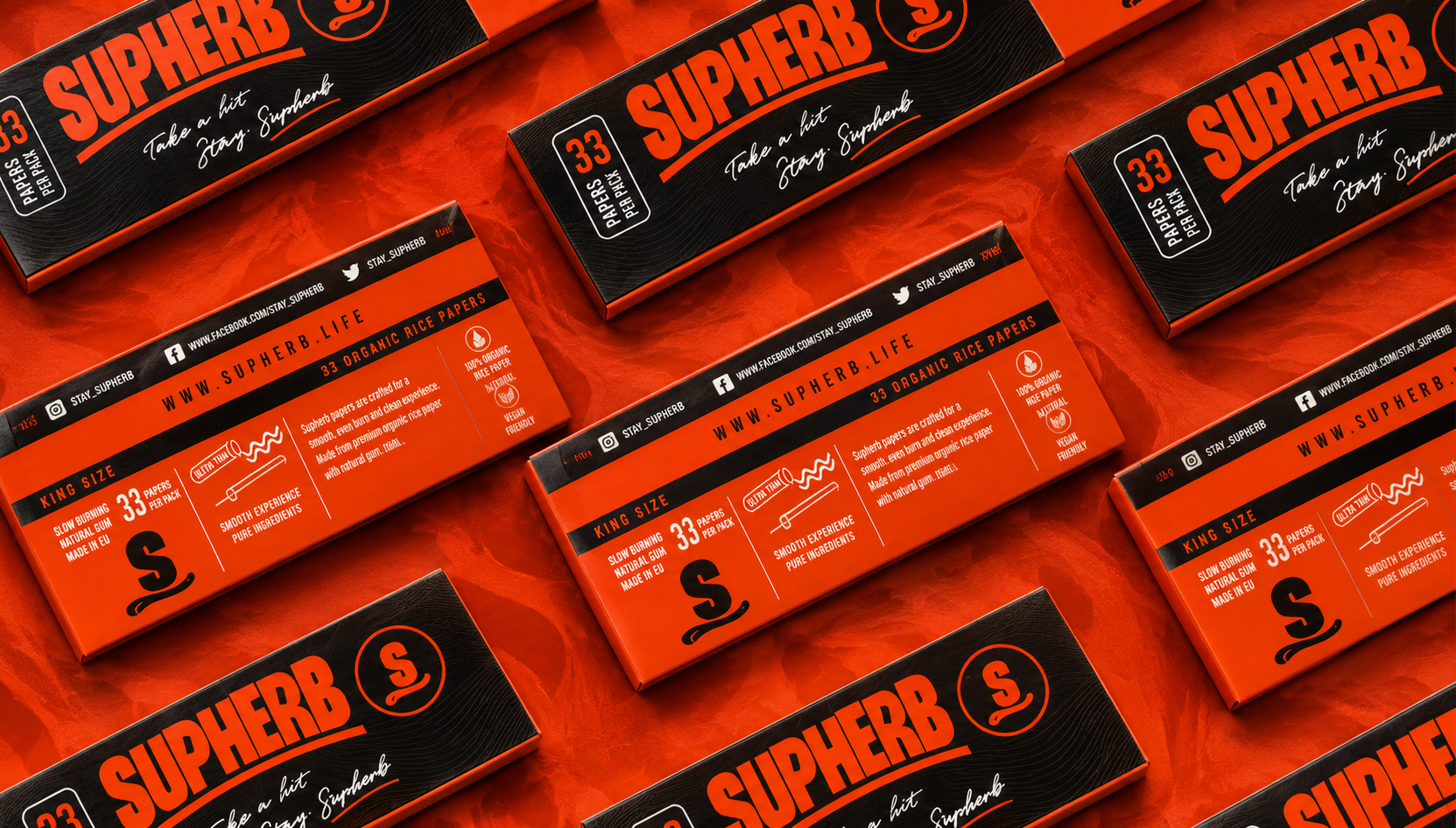
Size, material and thickness can all appear on a rolling paper pack. They describe different features, and knowing the difference makes the label easier to read. Here is the SUPHERB approach: look past the artwork and get to know the sheet inside.
Size is your starting point
Paper size describes the dimensions of the sheet, not its thickness or material. Names such as king size can vary between formats, so check the dimensions on the pack when they are available. Choose a format that feels manageable in your hands and suits your preferred tip size.
Material tells another part of the story
Rolling papers may be made from plant fibres such as rice, hemp or wood pulp, including blends. The material name is one detail; it does not tell you everything about the finished sheet. Check the information on the specific SUPHERB pack instead of assuming every product uses the same fibre.
Thickness and handling
Thickness describes the sheet itself. A thinner sheet may feel more delicate when you separate it from the booklet, while another paper may feel firmer between your fingers. Give yourself time to get used to a different texture rather than treating one description as a universal ranking.
Read the small details
- Dimensions: the length and width of a sheet.
- Paper type: the material or blend stated on the pack.
- Sheet count: how many papers the booklet contains.
- Included extras: whether tips or other items are actually listed.
Terms such as unbleached and ultra-thin refer to different features. Neither is a substitute for reading the full product description, and neither should be taken as a health claim.
Find your own preference
When comparing formats, change one feature at a time. Start with a familiar size, then explore a different paper type or thickness if you want to. Keep the booklet so you can identify the format you preferred when it is time to choose again. Stay curious. Stay SUPHERB.
Share:
Keep It SUPHERB: Paper Storage & Care